
Cain Culto on Deconstructing from Christianity, Decolonization and Recent Virality of, “KFC Santería”
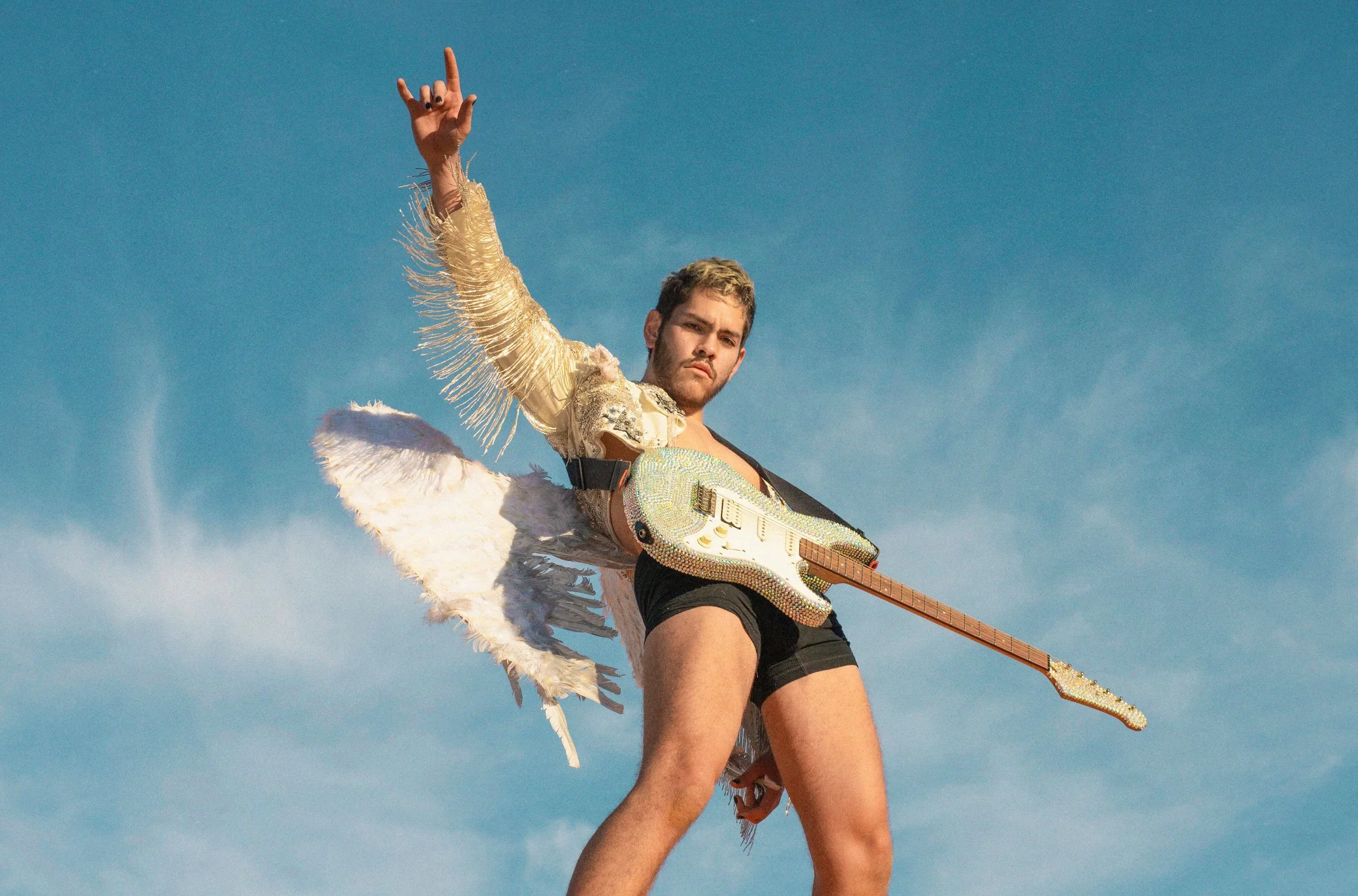
All images owned by the artist // via Hive Music

How did you come up with your stage name?
I knew I needed a new persona to explore parts of my queerness that I hadn't for so many years. My background is in biblical studies; I went to university for that. Cain is referring to the brother of Abel, the two children of Adam and Eve. At the time, I related to Cain because he was rejected by God. The story is kind of tragic. The end of his story is that he gets outcast by his family for rejecting God. Maybe there was a pain that I relate to his rejection, but also maybe I'm questioning the God of Evangelicalism. I'm trying to write something new over that narrative in my own life that doesn't end in tragedy.
With Culto, I wanted to reference cults. Religious groups are something that I'm curious about. Culto is actually Spanish for worship, so there's that side of it too.
Worship can be defined in a lot of ways. I think how I've repurposed that word is anything that taps us into the collective consciousness, or something that brings us to something bigger than ourselves. I'm trying to do that with my music still, even though I'm not in the Christian space making like music for “Jesus.”
What’s your relationship to spirituality right now?
I'm always asking questions about myself. Growing up in a hyper-religious family, that was the logical path for me, to explore through organized religion. So now, I don't really adhere to any specific religion. I'm still fascinated with cross-religious studies and the idea of syncretism, of the merging of religions, and how religions evolve because of our social needs as societies.
I'm witchy in a sense. People can hear that in my music. But whereas my old spirituality was more focused on heaven and the afterlife, now my focus is on the present. My spirituality is maybe more Pagan, in that sense.
One of the things I also really liked about you was this phrase you used, “rituals of liberation.” You’ve previously spoken about the genocide in Palestine and other social issues. Can you speak to what drives you to do that when it’s risky as an up-and-coming artist?
It still stems from my background in Christianity. Jesus was a political figure, or at least his writings have political implications. I take different things from it than most Evangelicals. I'm always raging against that in one way or another.
My time immersing myself in literature and going on my own decolonization journey has led me to see that the core of a lot of our systemic issues is capitalism, our governments, and their industry. I'm always trying to align myself with the marginalized and the oppressed and create art that inspires hope. It's dark times right now. It's important that I feel my music doesn't distract us from those things, but helps us to confront those things with a little bit of levity.
What does your decolonization journey look like?
A lot of it was unpacking the cultural shame of being a Latino, but also my indigenous heritage. Many of us Latinos have a history in indigenous America, and our gene pool is very complex. I've realized that from both sides of my family and have done the work to immerse myself in spiritualities that my parents saw as evil and demonic. Christianity came to save the demonic pagans or the misguided natives, right? It's colonization.
I realized a lot of this internal fear and shame from Christianity was based on prejudice against different worldviews. It was immersing myself in those teachings, going to different local communities to learn. A lot of it is just education and learning, seeing how much pain there is in these communities because of colonization today. That's showing support and plugging into movements, calling for land back.
I'm still in the middle of it. I hope to do much more.
How did you develop your visual style and persona?
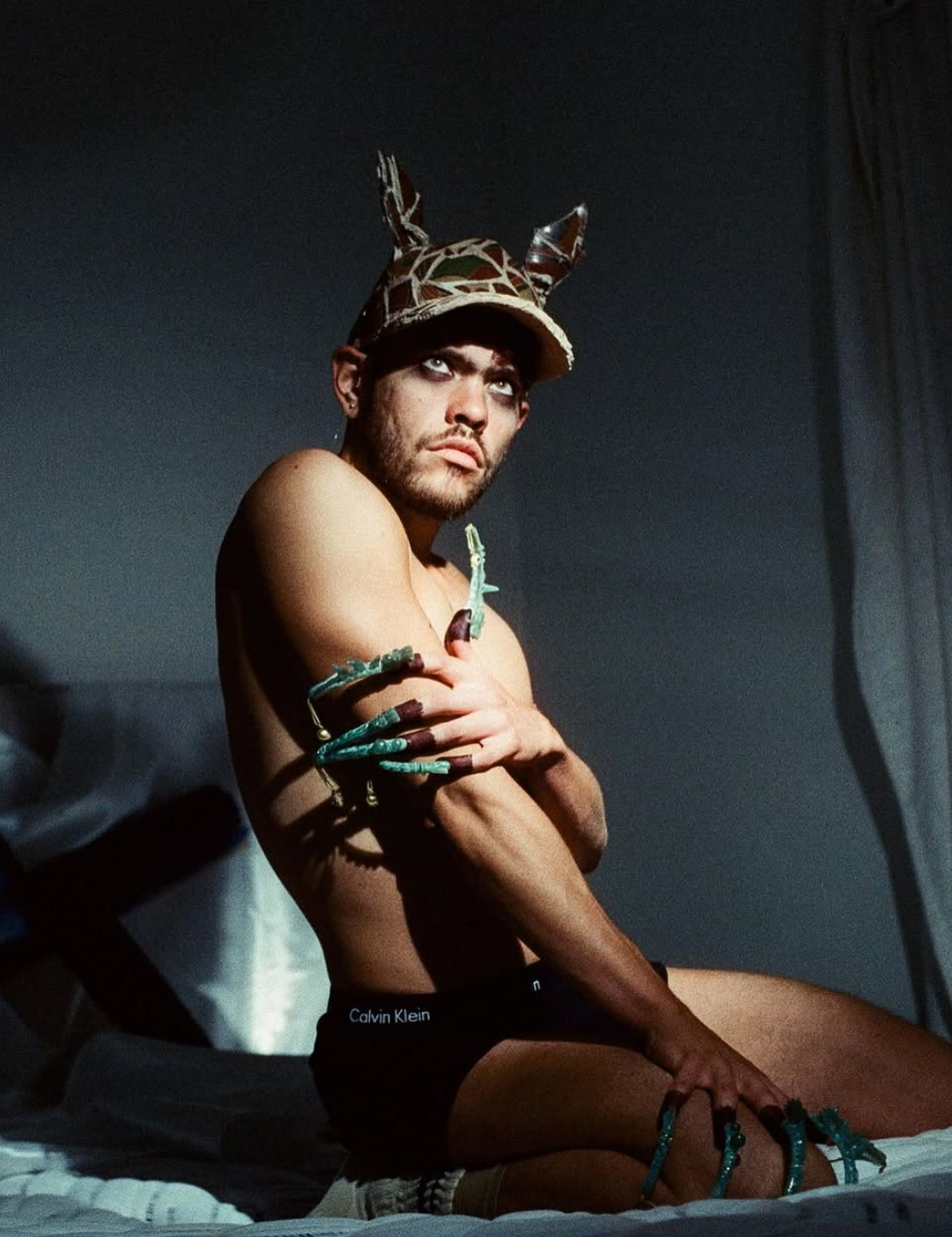
I love accessing different forms of art to communicate whatever serves the message best. I love fashion. I think fashion can be a political tool. It can say things that people can't receive through words. I'm very intentional with the messaging behind it. It's fun for me.
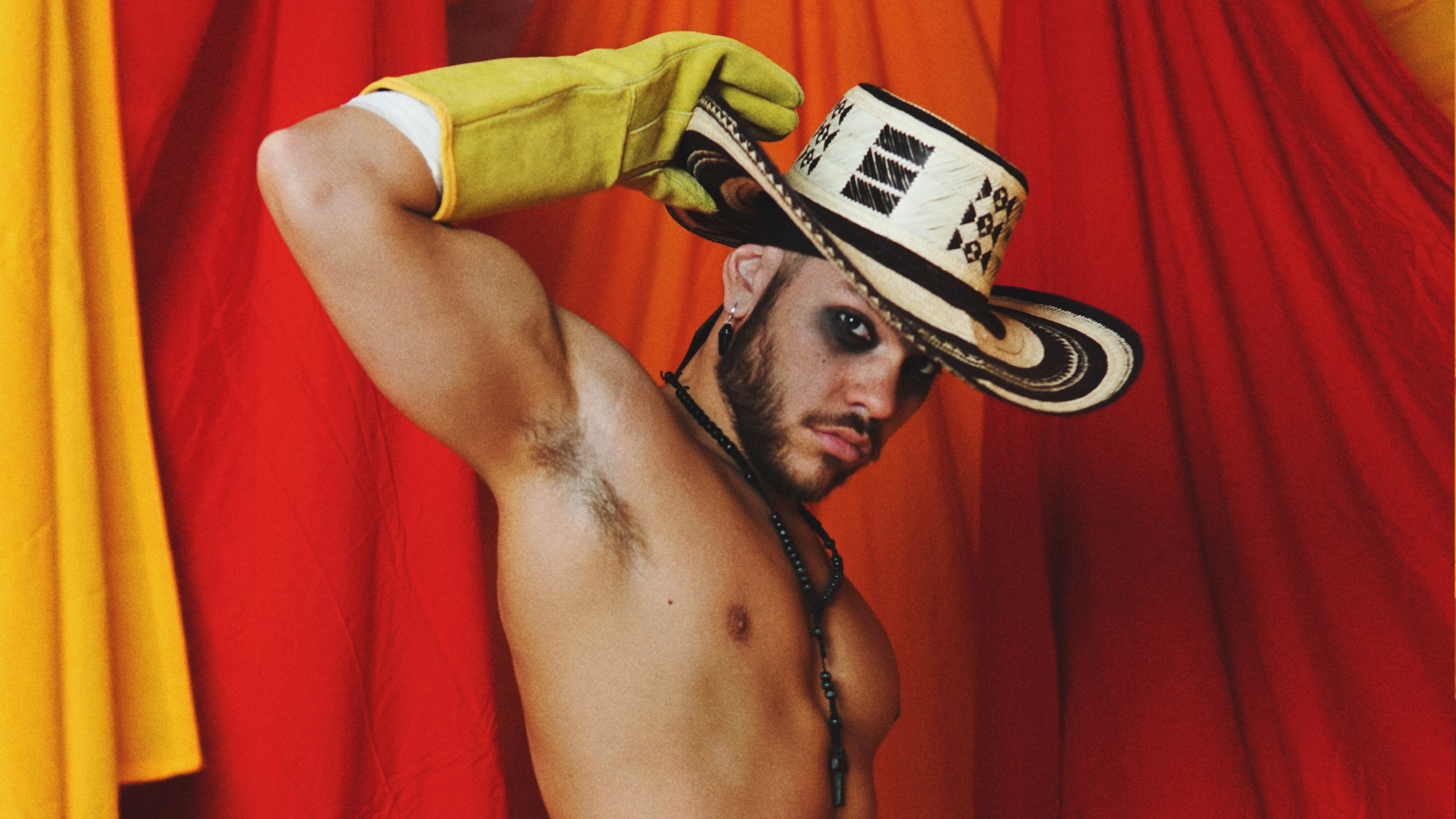
shot by @davidelaffe
Tell me about your musical background.
I grew up in Kentucky, and I was exposed to bluegrass music. I was able to go to a private teacher and study the fiddle and mandolin, and those are my main instruments. I play guitar, and sometimes I write songs on the piano, but I would not say I'm a pianist by any exaggeration of the word. Those two instruments are my core. Those are the most authentic to me. They feel like Kentucky. They feel like my background. And so it made sense to make those the primary kind of instruments leading the direction of my music.
What was it like growing up in Kentucky?
It was really fun. I grew up in Lexington and it's changed so much since I first moved there at five years old. Kentucky was my childhood. Growing up through the four seasons. Just small town vibes. It was a safe little place to grow up as a kid.
We stuck out as a Latino family in a predominantly white neighborhood. So there was a little bit of Othering, but I will say I never experienced crazy overt racism. But it did make me realize that I was Other, especially as a queer kid. I think that was more traumatic being in the South. But I would say even growing up in Lexington as a queer person might feel different than it did even 10 years ago.
What does your writing and creating process look like?
It's different for every song. Sometimes it starts with a specific message that I want to put out, like for this “KFC Santería” remix, it was like, I really want a politically overt, charged protest song. So that's how I came in with it, and I built my verse around that intention. Other times I'm finding the message as I'm creating the song.
For this unreleased track that'll be out this year, “Chica Linda”, I just started writing about my pain with the distance from my family, and specifically the women in my life––my two younger sisters. I’m mourning the distance because I'm in a different place and they're still in fundamentalism. It makes them afraid of who I am. As I'm writing it, it builds into, oh, I'm actually singing to my mom as well. I'm actually singing to my mom as a little girl, because I'm seeing her journey and the way that she was raised that led her to believe what she believes now, and how that affects me.
I'm weird as a songwriter, it's usually not me coming up with a song in a co-writing room. I'm thinking about these concepts for a long time. So, before even pen to paper, I've been sitting with the inspiration or the idea for a while.
How does it feel to tap into these really vulnerable parts of yourself?
I think because of what I went through before I became Cain Culto, I was in a Christian band, and I was very public about my deconstruction from Christianity. I received a lot of hate. Even well-intentioned comments were worried for me or trying to protect me from becoming a tool of Satan.
It felt like for a year, there was no one affirming me in my journey of leaving Christianity to accept my queerness. It felt like everyone thought I was insane. I remember there was this moment where one YouTuber, thought leader, Baptist preacher guy, made this video on one of my music videos, and it went viral. All his fans flooded my social media–– each account was commenting 15 times on all my photos. Really insane amount of hate, calling me possessed and evil.
It got really dark and painful, because my parents and loved ones and my church leaders were also joining in on all that language. It's one thing to get hate from random people online. They don't know me, but it hurt when it was from people who knew me personally.
It forced me to develop thick skin because of that year of my life, you have to build internal confidence. If I know I'm on my path and it feels true to me, you just learn to not put as much weight on them. We, as people, have to decide, are we living for the validation and approval of others, or are we living for our own souls?
Still from Kali Maa music video
Was there a particular moment that made you able to take that leap of faith in accepting your identity as a queer person?
I think it was just the reality of my life beginning to crumble because I was trying so hard to be this good Christian leader in my communities, and it was taking a toll on my mental health. It was making me depressed, making me paranoid, making me a closed-off person to the world and to love. It was making my world really small, and I was not as creative. I guess it's just my life was getting broken, and that brokenness forced me to find a different path for myself.
Is there anything else you want to add?
Yeah. I have a couple of different tracks out right now, the KFC remix, and I'm hoping to have a “KFC Santería” remix EP out this month.