

The Lies of a Showgirl
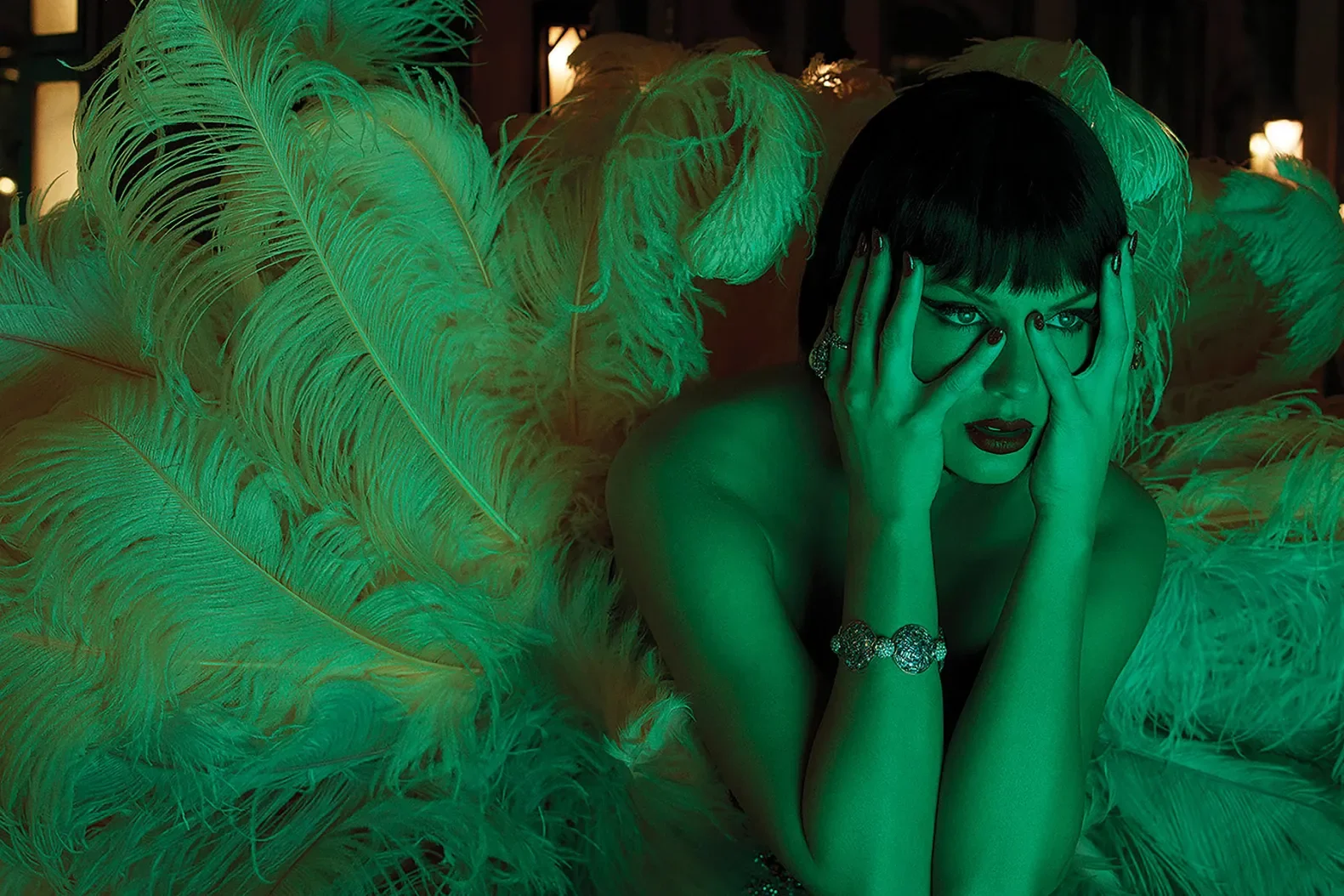
Mert Alas and Marcus Piggot // Photo via @taylorswift

I must admit: to a degree, it is refreshing to see that after headlining the highest-grossing tour of all time, Taylor Swift felt no pressure to create an equally engaging album. Now beginning her twenty-first year in the industry, however, I expected far more from Swift than what she gave. The Life of a Showgirl, debuting October third, consists of twelve tracks and runs a tight forty-one minutes, coming in shorter than any of Swift’s prior records since her debut self-titled album. Fans expected it to pack a punch. I expected to wake up with my timeline flooded with references to the album for the next several months at least. Instead, when I woke up on Friday, the world was quiet. Too quiet. Did the Swifties get raptured? Upon investigation, they did not. Something far more devastating was afoot. Taylor Swift’s The Life of a Showgirl, from a technical standpoint, was…well, it was bad.
I want to preface with the fact that I say this as someone who was once a cardigan-carrying Swiftie. Though I no longer consider myself a fan, for upwards of fifteen years, I loved Taylor Swift like only a teenage devotee could. I am, to my core, a pop music enjoyer, and for a while, I defended Swift with everything in me. I have had some variation of the “why I don’t support her anymore” conversation once a week for the past two months, each time secretly hoping that with The Life of a Showgirl’s release, I would be proven wrong in my thoughts regarding her recent actions, or driven back by quality music. Quite frankly, I’m even a little sad that I wasn’t.
From the jump, this record felt bland (though in comparison to what I would end up thinking, bland is rather complimentary). Its production is sonically sound, but feels characterless and unexciting. Opening track “The Fate of Ophelia” is a standard pop song centering around a questionable interpretation of Shakespeare and peppered with notes of pretension for pretension’s sake alone, a trait copied on the similar upbeat ballad “Opalite.” While these two tracks are danceable—and, in my opinion, the strongest musically on the album—the lyrics remind me of a child’s attempt to use big words in hopes of looking smarter. In fact, there is a distinctly childish air to much of the album, and I do not mean that as a positive.
At its worst, the misplaced angst is impossible not to cringe at. “Sometimes it doesn’t feel so glamorous to be me…Hollywood hates me,” the thirty-five-year-old singer croons during “Elizabeth Taylor.”
“It feels fake. All of it. It feels like an advertising act that listeners can see right through. ”
This sentiment is a repetitive one, though Swift seems to swing between that and its opposite, “I hate Hollywood,” several times throughout the album. Title track, “The Life of a Showgirl,” in fact, seems to span the entire spectrum, with Swift both warning of and romanticising a life in the spotlight. There is an interesting story to be told here, certainly, and Swift even starts to do that, but the track feels bored. It offers nothing sonically new to listeners—most tracks on the album feel indistinguishable from each other—and the lyrics aren’t developed enough to tell anything in their completion. It feels like a first draft, and Sabrina Carpenter’s verse on it feels more showy and passionate than much of what Swift sings on the entire record.
Lyrics “Pain hidden by the lipstick and lace/ Sequins are forever/ And now I know the life of a showgirl, babe/ Wouldn't have it any other way” present an interesting dichotomy, likely the one hinted at when promoting The Life of a Showgirl, stating on New Heights podcast, “This album is about what was going on behind the scenes in my inner life during this tour, which was so exuberant, and electric, and vibrant. […] This is the record I’ve been wanting to make for a long time […] It’s about what I was going through offstage.” Based on this statement, the record had the utmost potential—after the Eras tour, many found themselves ogling the seemingly gaudy life of this popstar, and it’s almost certain that there was some sort of rich inner life, some dichotomy within Swift during this time. How could there not have been? Who is Taylor Swift, the brand as opposed to Taylor Swift herself? Unfortunately, this was not expounded upon past the surface level.
While I admittedly never thought Swift’s lyricism to be at the Dickensian levels that other fans seemed to, she has proven capable of the depth required for this expansion. Swift has written technically proficient songs many times over. I stand by the opinion that folklore and 1989 were both incredibly skillfully crafted in concept and execution. The richness exhibited in these albums often lies, however, in their subject matter—shaping both the lyrics and production. These albums each carry a level of profundity that Showgirl lacks in its entirety, though one I’m sure Swift could not have been devoid of while touring.
Any creator, whether they want to admit it or not, is shaped by their circumstance. That includes (very heavily, actually) the people they choose to surround themselves with. Likewise, one must look at exactly who Swift is choosing to be seen with. Formerly, Swift surrounded herself with a posse of like-minded young celebrity women, including (but not limited to) Lorde, Emma Stone, Hayley Williams, and Gigi Hadid. Taylor Swift’s squad members were known during this era to be pioneers in their field, often using their platforms to speak on feminism and politics, two subjects Swift was also very vocal about at the time. While retrospective opinions on the “squad” seem to be varied, at the time they were everywhere, and they served as a representative entity of all that the 1989 album stood for: parties, glamour, youth, and female empowerment.
Whether or not this was originally intended as a marketing strategy, it ultimately proved to be an effective one. Swift’s squad struck a balance between being relatable and aspirational.
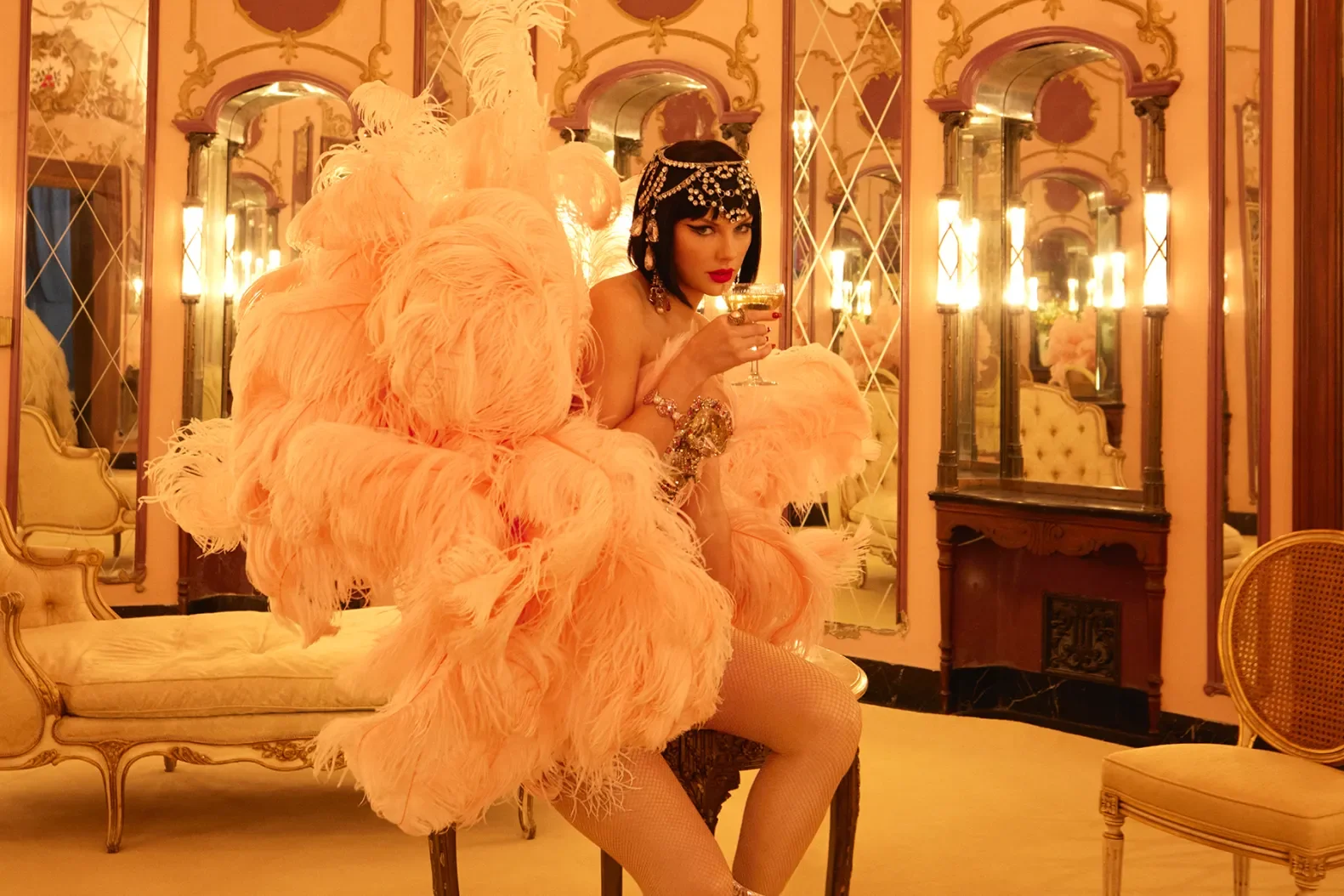
Mert Alas and Marcus Piggot
Swift’s friends then shared with her some power, some equal footing, some similar stature, whether it lay in their industry, their talent more broadly, or even their physical appearance. One could look at any of Swift’s squad at that point and make some connection as to why these individuals may choose to hang out, even if the connection was only skin deep. Now, however, Swift lacks this: her squad-era friendships seem to have dissipated and she instead spends her time around the politically questionable friends and family members of fiancé Travis Kelce. Her few musical friends (with the exception of Selena Gomez) she keeps at a metaphorical arm’s length—the distance does not necessarily seem to stem from their friendship itself or comfort level around one another, rather where they stand in the public eye.
In this, of course, I am speaking of her once fruitful relationship with Olivia Rodrigo. The young starlet spent her early years idolizing Swift, and as she rose to public prominence, the two cultivated what seemed to be a sweet mentorship. However, as Rodrigo reached new heights and began to be seen as competition—and perhaps even an equal—in the industry, Swift dropped a lawsuit claiming Rodrigo sampled one of her songs without permission, though fans still claim the songs bear no resemblance.
Rodrigo and Swift have not been publicly seen or interacted together since this occurrence. It seems as though Swift could not handle keeping company with another successful woman in her industry. This is proven time and time again; in fact, as other female starlets’ release dates loom, Swift drops another album variant or remix to coincide with their records, constantly ensuring her spot at number one.
It is impossible that Swift is unaware of the public perception of her new, mostly Trump-supporting friends. It is impossible that she’s unaware of how she has shifted her public persona to fit in with them, silent on nearly every issue she was once so vocal about. Thus, it almost feels like a mockery to hear her on “CANCELLED!”: “Good thing I like my friends cancelled/ I like 'em cloaked in Gucci and in scandal.” In fact, The Life of a Showgirl feels at several points like a conservative dog whistle. While I find no fault in Swift admitting she’s at a point in her life where she’d like to settle down, the lyric ‘have a couple kids, got the whole block looking like you” (sang in reference to fiancé Travis Kelce) is questionably phrased, to put it lightly. And if everything Swift says and does is calculated to such a degree as she herself claims it to be, this phrasing was intentional and incredibly distasteful.
Distaste runs rampant in this album, however. The entirety of the ninth track, “Wood,” is spent talking about the sheer proportions of Travis Kelce’s schlong—“Forgive me, it sounds cocky/ He ah!-matized me and opened my еyes/ Redwood tree, it ain't hard to see/ His love was thе key that opened my thighs.” While these lyrics are tactless and, quite frankly, nearly impossible to get through without cringing, this isn’t the most egregious of Swift’s literary crimes on the album.
Track seven, “Actually Romantic,” serves as a barely-veiled diss track to Charli XCX’s “Sympathy is a Knife.” Standard, right? Maybe even interesting to stir up drama? Yeah, maybe, but much like Swift’s shaky read of Shakespeare in “The Fate of Ophelia,” and despite claiming online to be fans’ “English teacher,” the track relies on a gross misinterpretation of its predecessor.
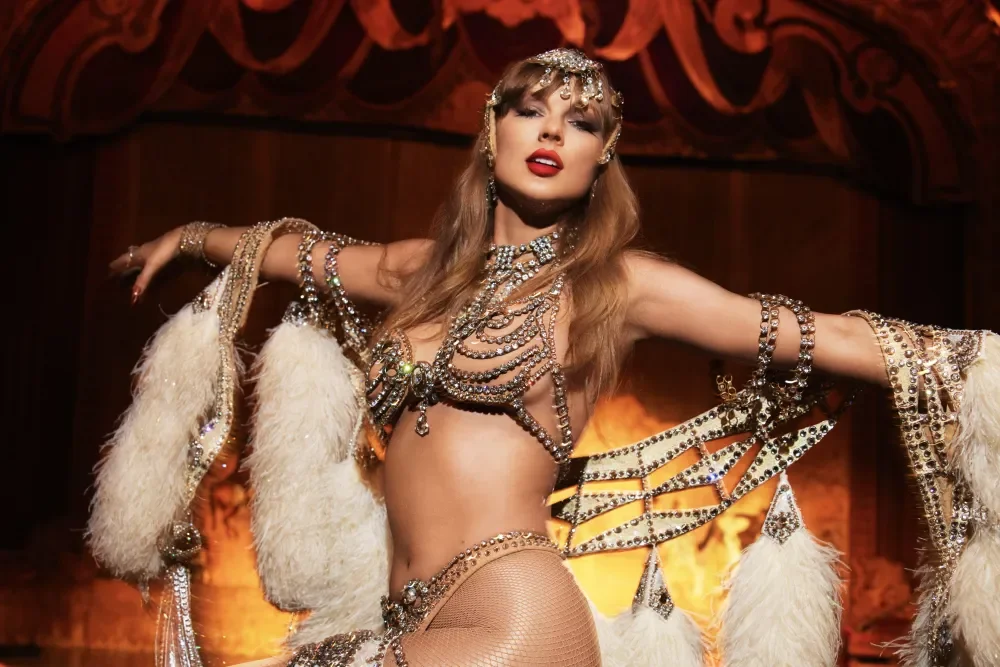
Mert Alas and Marcus Piggot
Charli XCX’s “Sympathy is a Knife” is a complicated song. That’s kind of where its artistry lies. Charli sings about insecurity, hating herself for her insecurity, for her jealousy of the level of stardom Taylor Swift has reached. The chorus comes in as a glaring confession, rather than a dig: “'Cause I couldn't even be her if I tried/ I'm opposite, I'm on the other side/ I feel all these feelings I can't control/ Oh no, don't know why/ All this sympathy is just a knife.” In fact, most of this song comes across as Charli’s own self-anger. Even when she claims, “Don't wanna see her backstage at my boyfriend's show,” (both girls at this point were dating members of the band The 1975), she does so under the guise that her insecurities bring out the worst in her–it isn’t that she hates Swift, it’s that she doesn’t feel confident in herself.
“Actually Romantic,” on the other hand, packs punch after punch directed at Charli, insulting her drug habit and insinuating that her “obsession” with Swift is actually repressed sexuality: “You think I'm tacky, baby/ Stop talking dirty to me/ It sounded nasty, but it feels like you're flirting with me/ I mind my business, God's my witness that I don't provoke it/ It's kind of making me wet.” Perhaps ironically, however, this mean girl misunderstanding anthem is the most passionate Swift sounds on this record, and the most sultry, despite its homophobic undertones.
Either way, in terms of where these artists fall on the musical totem pole, Charli XCX’s track was clever, nuanced, and painfully self-aware. Her party-girl aesthetic couldn’t be Taylor Swift, even if she wanted it to, and certainly Swift is aware of this as well. Much like what happened with Olivia Rodrigo, Swift’s response feels like punching down. And it isn’t a good look. I think therein actually lies the answer to what happened with this album as a whole—what was attempted to be cooked, and what burned.
As Swift has rid herself of any sort of musical “squad” and made enemies due to her constant re-release tactics, she is also not ignorant of the musical trends that arise. The Life of a Showgirl appears to be her failed attempt to capitalize on all of them at once. Many fans have pointed out how reminiscent visuals for The Life of a Showgirl are to Chappell Roan’s enduring Rise and Fall of a Midwest Princess, as well as how Swift’s attempts at playful, more sexual lyrics feel like a venture into Sabrina Carpenter’s sultry style. Even the unnecessary beef with Charli XCX feels like a shoddy callback to brat summer itself—Charli’s “Girl, So Confusing” acted as a callout to fellow artist (and former friend of Swift’s) Lorde, stemming a collaboration where the two artists “work it out on the remix.” There may even be some irony to the Olivia Rodrigo lawsuit; in this album, Swift has been accused of taking instrumental tracks from other artists’ tracks, most notably “Wood” and The Jackson 5’s famed “I Want You Back.”
These showgirls have perfected their acts, and Swift knows she can ride their coattails and somehow still beat them in their own race. Her miscalculation, however, lies in the genuineness of these trends, these albums, and the artists who produced them. Even her attempts at emotion come across as surface-level, seeking attention from social media virality rather than a genuine connection.
Track five, “Eldest Daughter,” does this to a remarkable degree, the chorus beginning “But I’m not a bad bitch/ And this isn’t savage,” playing off, of course, Megan Thee Stallion’s 2020 mass hit “Savage.” The Life of a Showgirl, in this way, often feels detached, each line feeling like its own entity that has the hope of a resulting viral moment. This lack of depth to the album leads to even her attempts at being clever or punny feeling manufactured. It feels fake. All of it. It feels like an advertising act that listeners can see right through.
But maybe that doesn’t matter. After all, the grasp Taylor Swift has on the current musical world is ironclad. She garnered the power to convince her millions of fans to purchase this album in several forms and colourways, as well as its merch, before even hearing it. Her empire has been built, and she’s rolling in it—such is the life of a showgirl. Swift turned her musical identity into a successful brand, and she turned her brand into a corporation. Despite its profit, however, a corporation cannot make art, and The Life of a Showgirl has me worried that Swift lost her biggest selling point–herself.