
Ana Evans’ Shell Blends Clown, Drag, and Audience Participation Into One of Fringe Theatre’s Most Inventive Shows
Part sex-ed lecture, part drag performance, part communal experiment, Shell asks audiences what they want—and then dares them to answer.
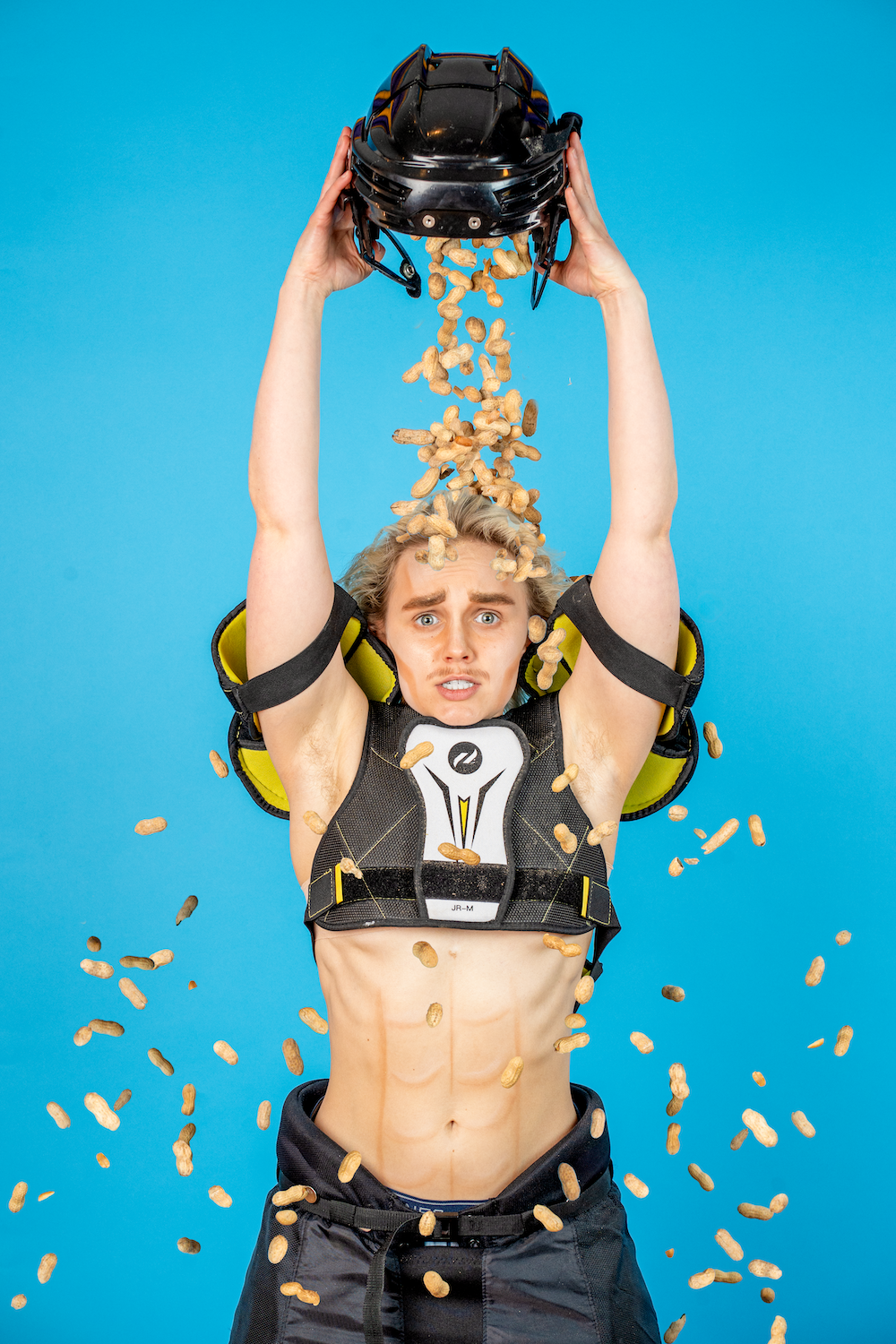
Photo Credits: Morgan McDowell

“Want?” Croaks Ana Evans, pointing an elongated finger into the third row of the crowd. It’s a small theater, the Huron Club, in the basement of the SoHo Playhouse. The audience is packed to the gills, and the first row (whose tickets are $10 cheaper) sits on Ikea-branded carpet swatches on the floor. It’s almost impossible not to befriend your neighbor; you’re sitting cheek to cheek.
Before the show, co-creator and director Linnea Scott passes around paper and pencils. “Write down something you really want,” they instruct. Peanut, a child-like, mustachioed, peanut-suit-wearing character, has just metamorphosed from Andy, a macho hockey player who is equal parts BRO, baby boy, and befuddled teacher. “Want?” Peanut croaks again, prompting an audience member to read their paper aloud.
“I crawl inside the hockey bag, and then the show ends, and I'm like, whoa, what happened?” said Ana, who spends the hour lip-syncing, quick-changing, and yes, zipping herself into a hockey bag.
The one-person show moves from an interactive sex-ed lesson (in this case, BRO works as a convenient acronym for Breaking Reproductive Oppression) to a surreal exploration of gender identity, desire, and the body at the speed of light. It encompasses spirited audience interaction, strobing lights, and a sprinkle of gender based violence.
How does our shell complicate our relationship with our insides? Incorporating elements of clown and drag, Evans explores the idea of how we use each other––both under the oppressive hand of patriarchy, but also as tools to better understand the world around us.
“It's not used as in there's an expectation, but that there are resources around us everywhere and we can use them, says Evans. “I think that’s a huge lesson of like making indie theater.”
Both Evans and Scott are products of the drag world. They took the same drag class (though at different times) before finding themselves in the same group of performers. Soon, they were a drag family, a group that Evans credits as essential to her creative process. Andy, a drag persona complete with stenciled abs, was born out of an intimate theater group. Evans developed a ten-minute Andy bit, which soon blossomed into the puppy-dog professor of sort of sex-ed that exists in the show today.
The show takes morsels from Evans’ real life. Her hockey-playing dad and brothers. Her childhood nickname, Peanut, which becomes an extended metaphor in the show. Her childhood dreams are actualized in the final act. But the minimal, open-ended nature of the performance makes room for another character to emerge, the audience.
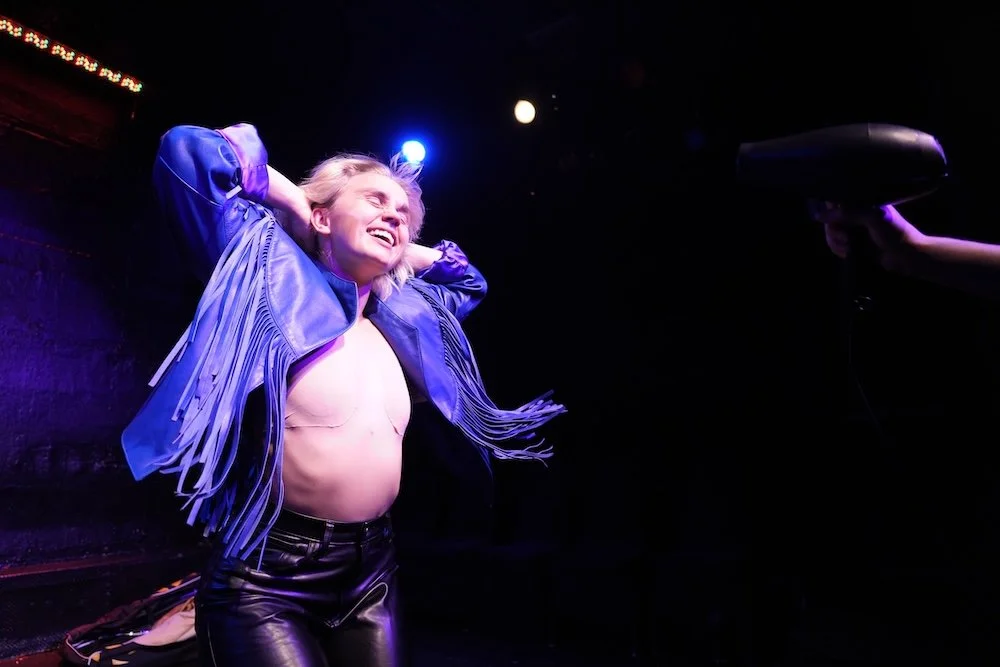
Photo Credits: Morgan McDowell
Shell is in its second iteration, though Evans has been writing and experimenting with the characters for over four years. The production has already made the rounds at the Edinburgh Fringe last summer. Performing Shell over 20 nights in a row produced a sort of magic in its repetition, Evans explained; each night yielded an equally rewarding, if not different result. Over the past weekend, for example, Peanut extended a tongue to a few audience members. Again, results vary.
“I trust the play,” explained Evans. “That's such a gift about getting to have this year-long relationship with it, the play comes alive when I'm alive.”
Indeed, Shell is a high ropes course of trust between performer and audience. At times, Evans provides the audience with explicit instructions. “I’ve never tried this before,” she tells a sold-out Friday night crowd as she embarks on an elaborate stunt involving four volunteers. Other times, it’s ambiguous, a finger, a tongue offered like a handshake to the crowd.
Though Shell is solo work, Evans sees it as a deeply collaborative process. She refers to Scott as her life partner. “A lot of [rehearsal] is just harassing Linnea,” she says. In the early days of rehearsal, Evans found herself fighting an urge to reread obsessively, combing over the characters and practicing for seven hours a day. But the show found its rhythm when she and Scott could just play. These days, Shell rehearsals involve Scott and “Peanut” (who Evans refers to exclusively by character name) having extended conversations.
Somehow, this solo show has bloomed into the ultimate act of community. Evans snuggles 50-some strangers into a basement and invites them to embark on a performance that demands vulnerability and curiosity from the audience. What do we want? How can we use eachother?