

Ginny Co-Founder Thaniyia Mano on South Asian Wellness, Entrepreneurship, and Building Beyond Western Validation
Asian Heritage Month invites Canadians to celebrate the histories, cultures, and contributions of Asian communities. It's also an opportunity to recognize the traditions that have long shaped how people think about wellness, food, and connection.
For Thaniyia Mano, co-founder of Ginny, alongside Bianci Mensah, those traditions aren't wellness trends; they're part of her lived experience.


As Western wellness culture continues to embrace ingredients like tulsi, ginger, ginseng, and adaptogens, many consumers are only now discovering practices that have existed across South Asian and Asian communities for generations. During Asian Heritage Month, it's worth asking not only which traditions are gaining mainstream attention, but also whose voices are being recognized in the process. For Thaniyia Mano, co-founder of Ginny—a Canadian sparkling adaptogenic beverage designed to help people unwind without alcohol—those traditions weren't trends, they were already part of her life.
Launched in March 2026, Ginny combines ingredients rooted in South Asian and East Asian wellness traditions with a modern approach to social drinking. Beyond the beverage itself, the company is part of a growing wave of consumer brands led by women of colour who are reshaping conversations around wellness, representation, and entrepreneurship.
We spoke with Thaniyia about the origins of Ginny, the complexities of seeing cultural ingredients enter mainstream wellness culture, and what she hopes the next generation of South Asian women founders take away from her journey.
Founding Ginny
SYNT: What was the moment that made you realize you wanted to create Ginny?
Thaniyia Mano: We cut back on alcohol and didn’t see an option that felt like us. Everything was either mimicking alcoholic drinks and flavours, or packed with sugar and ingredients we weren’t looking for. We wanted something we’d actually enjoy, something rooted in flavours and traditions we grew up with.
As we looked deeper into the industry, we noticed that many of the brands innovating with Asian and African traditional ingredients were often not led by people from those cultures or communities. That became a huge driving force for us.
Ginny became our way of turning that cultural familiarity into a modern ritual, while creating space for people like us to be a part of the conversation.
All images courtesy of Thaniyia Mano
SYNT: You’ve said the drink started with ingredients you already knew rather than market trends. What did that process look like?
TM: We started with plants and flavours we already knew from our cultures, then worked with our formulator and within Health Canada guidelines to choose ingredients that made sense in a beverage. The goal wasn’t trends, it was translating familiar traditions into a modern, compliant drink people can enjoy.
SYNT: How did your personal relationship to wellness influence the brand?
TM: As a recreation therapist, I see how meaningful activity and community support emotional well-being. We built Ginny to carry that into social moments, so people can feel connected and included without centering alcohol.
It took me a while to separate wellness from what I was being sold and understand what it personally meant to me. Wellness is often branded as something exclusive and premium but when you look past the noise, wellness is really about being in tune with yourself. This very much translates into how we think about Ginny and our intention to create an inclusive brand that makes wellness feel accessible and within reach.
“Without that context, traditions risk becoming transactional rather than something rooted in care, community, meaning, and intergenerational knowledge.”
South Asian Wellness Traditions in the Mainstream
SYNT: Why were tulsi, ginseng, ginger, and schisandra berry the ingredients you chose?
TM: We were inspired by Ayurvedic and East Asian approaches, and by the ingredients we knew from our own communities. We then collaborated with a Toronto-based naturopathic doctor to create a base formula using familiar herbs like ginseng and tulsi, so people can recognize and feel comfortable with what they’re drinking.
Adaptogens are still relatively new in Canada, and there is definitely a lot of education needed around these plants and traditions. It was important to us to start with ingredients that felt authentic to our broader diasporic cultures, while also being familiar enough for people outside of those traditions to connect with and it felt approachable.
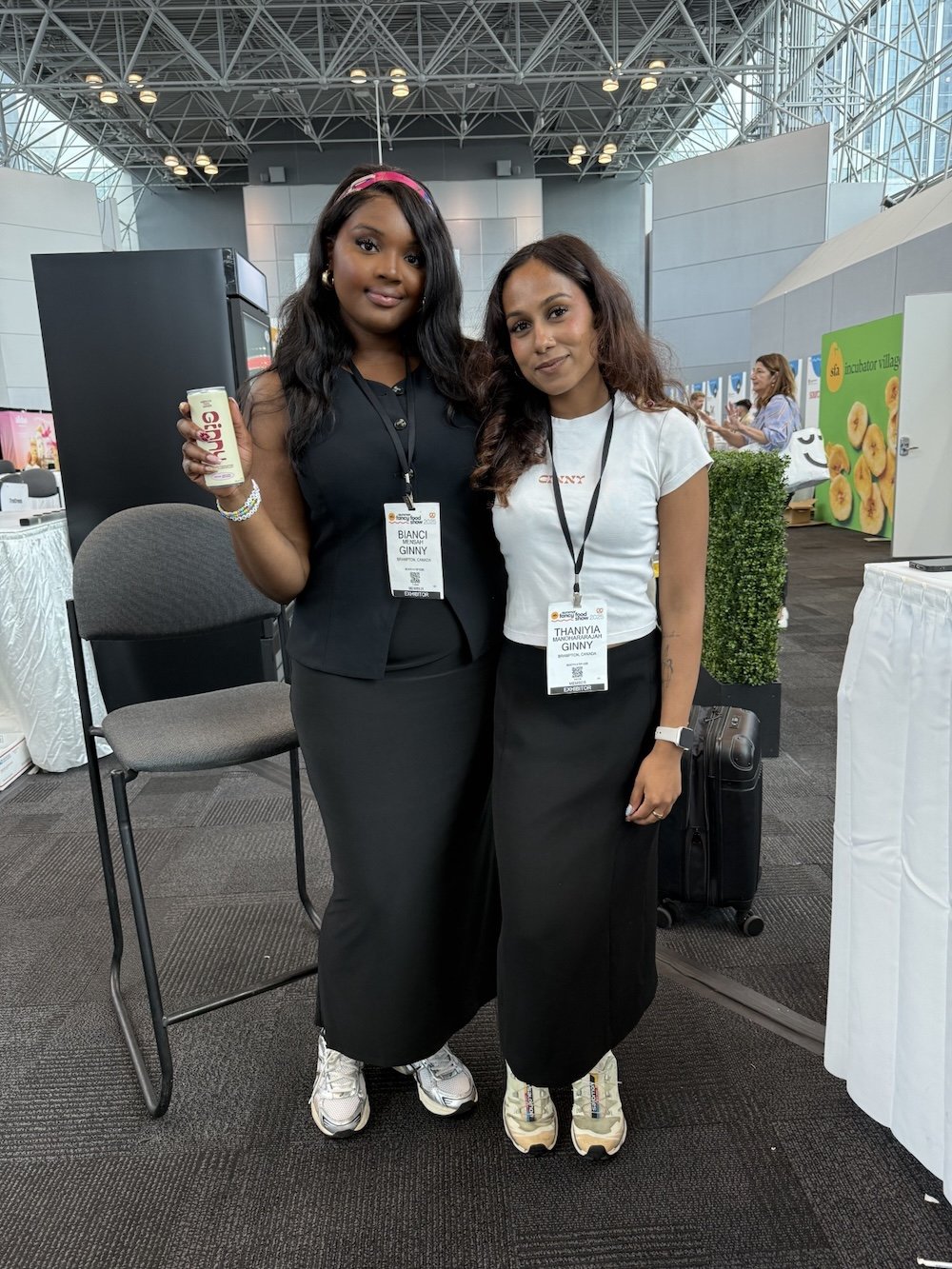
Ginny co-founders, Bianci Mensah (left) and Thaniyia Mano
SYNT: Many of the ingredients in Ginny have existed in South Asian and Asian healing traditions for centuries. What's it been like watching those ingredients become part of mainstream wellness culture? Do you ever feel conflicted seeing traditional ingredients reframed as "trendy" or "newly discovered" by Western wellness industries? And what does it mean to see South Asian wellness traditions increasingly treated as credible or aspirational in North America?
TM: There are two sides to it. On one hand, it’s validating to see these traditions highlighted and appreciated. But on the other hand, it feels complicated. There’s a long history of traditions being repackaged without proper credit. We’ve seen it with yoga, meditation, the commodification of tea and spices, and even within fashion.
It’s quite ironic because growing up, I despised parts of my culture, my skin colour or the smell of our food. I think a lot of that came from never seeing myself or my culture represented in Western media and not feeling accepted. I suppressed my Tamil identity and became ignorant to some of the things my parents taught me because they didn’t align with what was out there.
As I’ve gotten older, I’ve found myself yearning to reconnect with my roots. I remember watching a video about mung beans and its benefits, and I immediately asked my mom if she knew what they were. She looked at me and said, “I’ve made this so many times before. When someone on YouTube tells you it’s good for you, you believe it, but when I tell you, you don’t.”
That stuck with me because I realized I chose to ignore what I learned at home and only trusted traditional knowledge once it was validated by someone who didn’t look like me (yikes). This is when I realized these wellness practices aren’t newly discovered. They may be new to Western wellness culture, but these traditions have existed for generations.
That realization changed how I think about building Ginny. I became much more conscious of acknowledging where ingredients and traditions come from, because I know firsthand what it feels like to overlook or suppress parts of your own culture until they’re validated elsewhere. With Ginny, we’re not claiming to be the ultimate experts or trying to position these traditions as newly discovered, instead we’re bringing parts of our cultures forward in a way that feels authentic.
SYNT: How do you balance traditional healing knowledge with modern branding and consumer expectations?
TM: Ginny is rooted in our cultures and the broader diaspora, and with our own experiences being first-gen Canadians, we combine influences from the two worlds to be able to share what Ginny is in a familiar way and while also using accessible language. Ginny is a love letter to our cultures, but we're also opening the door for everyone else to feel invited in.
SYNT: What gets lost when traditional wellness practices are stripped from their cultural context?
TM: Intentionality is the first thing lost. You also lose the communal context. There is so much rich history behind how and why these ingredients and practices are used.
Without that context, traditions risk becoming transactional rather than something rooted in care, community, meaning, and intergenerational knowledge.
SYNT: Did you ever feel pressure to translate these traditions for mainstream consumers? How do you balance accessibility with protecting the integrity of cultural practices?
TM: I wouldn’t necessarily say we felt pressure. Instead, I felt it was important that we stayed true to the ingredients while also making them approachable and welcoming for people unfamiliar with these traditions. Accessibility doesn’t have to come at the expense of authenticity.
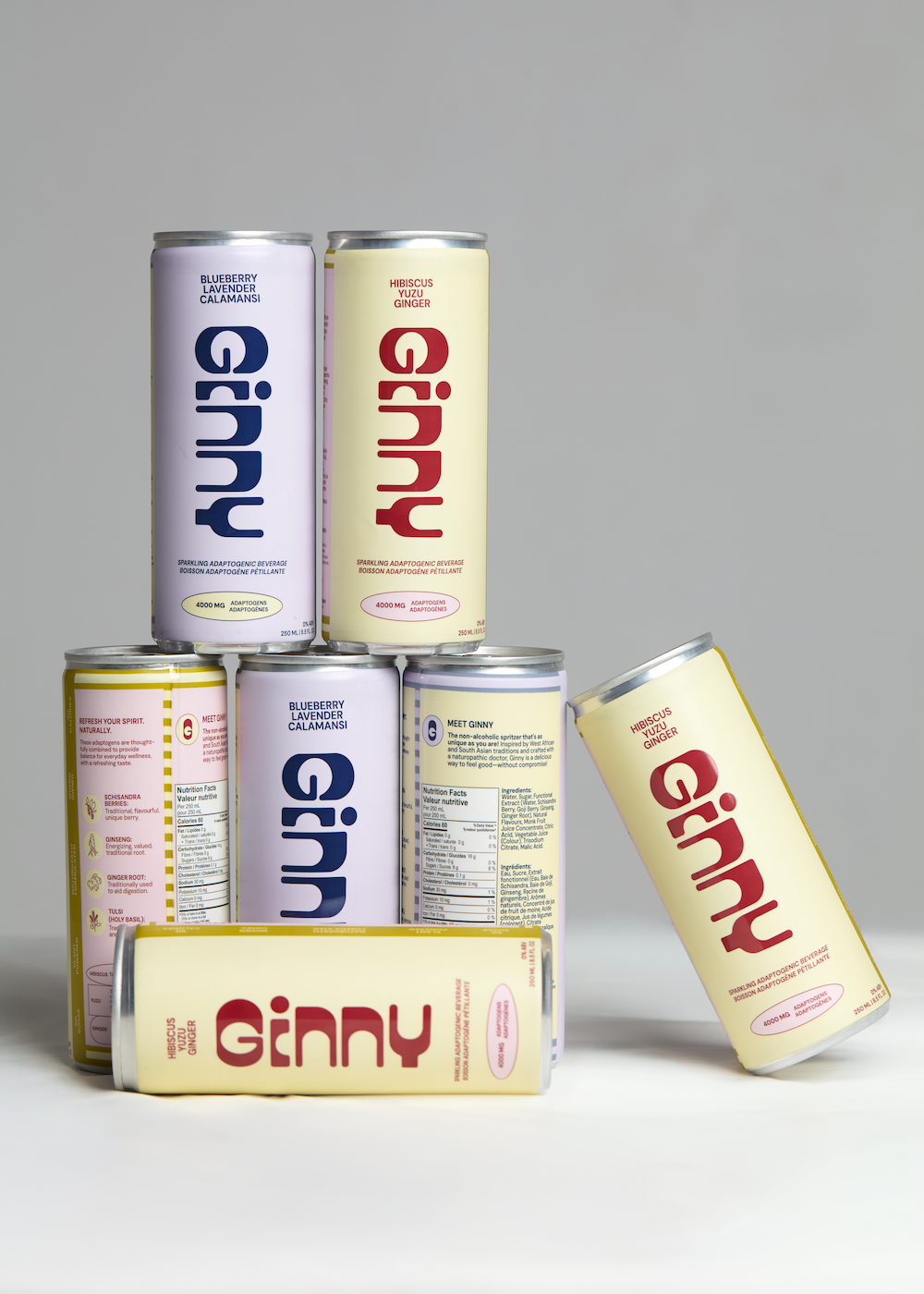
On our packaging, we call out Tulsi and include “Holy Basil” beside it in brackets. We chose to do that because we wanted to preserve the traditional name while also making it easier for people to recognize and connect with.
For us, it’s less about translating and more about creating opportunities to educate and invite people into the conversation.
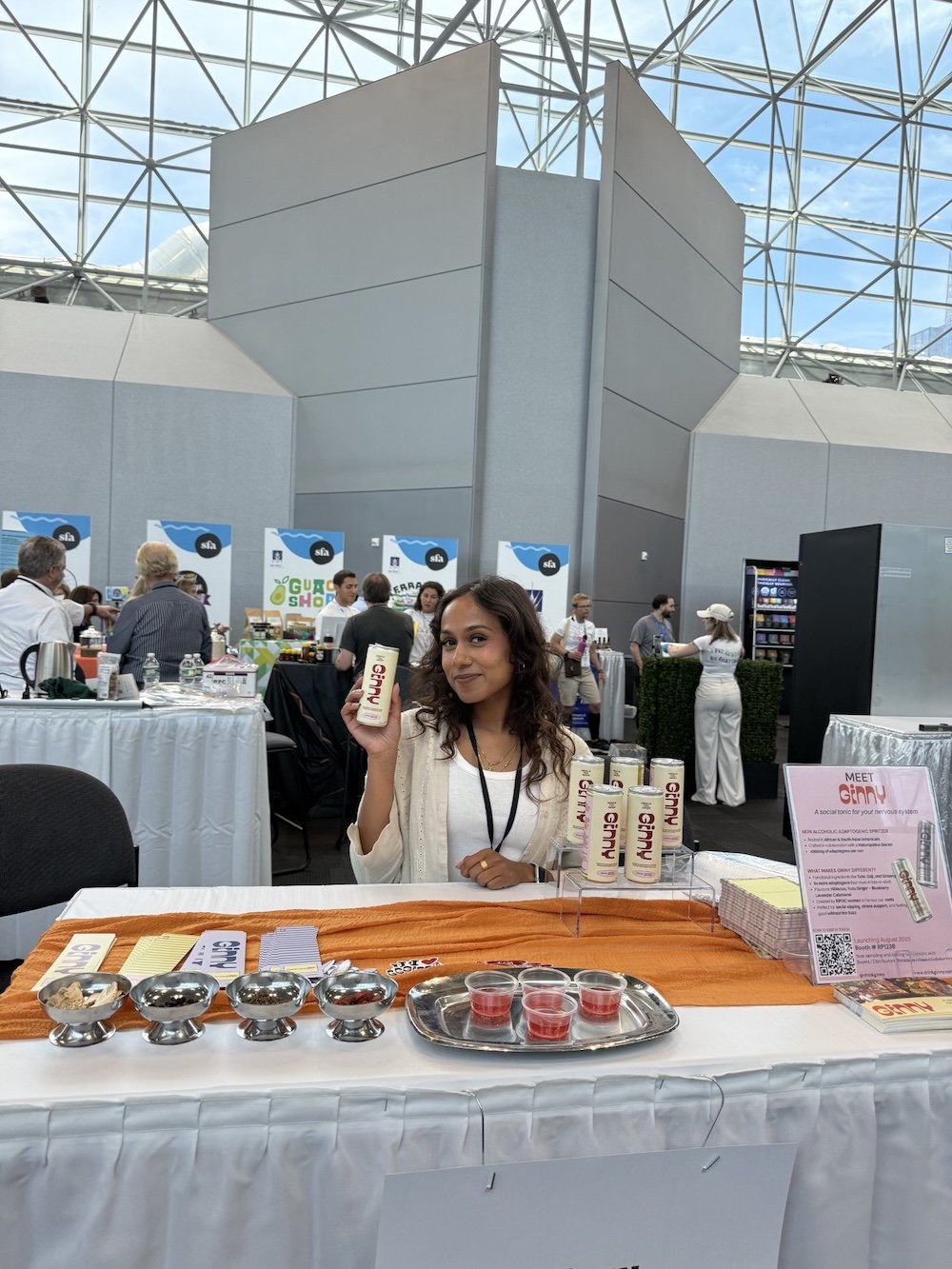
Women of Colour in Consumer Packaged Goods
SYNT: What has your experience been like entering manufacturing and distribution spaces as a woman of colour? Were there moments where you felt underestimated while building the company?
TM: I didn’t really think about being a woman or person of colour in business until I started building Ginny. I came from healthcare where I was surrounded by women, so entering manufacturing and entrepreneurship was the first time I became really aware of how you could be treated and responded to.
There were definitely moments where people underestimated us because we were two young women who didn’t have a background in Food and Bev. We noticed people wouldn’t take us seriously or would undermine our knowledge. I’ve had situations where I communicated something multiple times and got nowhere, but when my brother repeated the exact same thing, things suddenly moved faster.
Building Ginny changed my understanding of how business and access work. My co-founder and I are both first-generation Canadians and didn’t come from entrepreneurial or CPG backgrounds. We didn’t have access to networks, mentors, capital, and warm intros to industry experts. As BIPOC women founders, we face the harsh reality that less than 1% of businesses like ours receive adequate funding. All these barriers and challenges made us feel like we may never actually launch. But despite not having those advantages, we officially launched in March 2026 and sold over 6,000 cans
SYNT: Have there been moments where your perspective as a Tamil-Canadian woman became a strength in ways the industry didn't initially recognize?
TM: I think one of the biggest strengths comes from how I grew up thinking about care, hospitality, and community. In many Tamil households, food and drinks is how you show love and care, welcome people in, and create connections.
It’s also influenced how I think about flavour and innovation. I grew up around so many unique ingredients (like fruits and spices) and combinations that aren’t always represented in mainstream beverage spaces. That gives us the opportunity to create products and flavour profiles you wouldn’t typically see on the beverage aisle. Honestly, that’s one of the things I’m most excited about, exploring our cultures and showing that they can be a source of innovation, not just inspiration.
SYNT: What support systems or communities have helped you through the launch process?
TM: Joining incubator programs has been the most helpful. We’ve been a part of YSPACE, Tamil Venture Program, Coralus, and League of Innovators to name a few.
Our social media community has also played a huge role in shaping Ginny. Before launch, we had 10 people from our community join a focus group, and their feedback helped us make important changes to our packaging.
SYNT: Do you feel consumers are actively looking for brands with more authentic cultural perspectives today?
TM: Yes, absolutely!! Consumers are really smart, and I think they care more about the why and the people behind a brand just as much as the product itself. They can see right through the BS.
I find that Gen Z in particular is more conscious about who they support and whether a brand is actually authentic to what it’s selling.
SYNT: What do you hope younger South Asian women see when they look at Ginny?
TM: I hope younger South Asian women see that something different is possible. Whether Ginny becomes successful or not, I hope they see that it’s okay to put yourself out there, take risks, and choose the unconventional path.
A lot of us grow up forced with expectations around stability, achievement, or timelines for what our lives should look like. Sometimes entrepreneurship or building something of your own doesn’t fit into that. I hope they realize it’s okay if their path looks different.
Even if your parents think you should be getting married at 20 something, instead of “wasting time” building something, I hope they know they’re allowed to be curious and try. If you don’t give yourself permission to try, who will?
SYNT: What does representation actually look like in practice, beyond marketing language?
TM: Being intentional about who we partner and collaborate with.
It means using our platform to amplify and support women and BIPOC individuals whenever possible.
It also means giving credit to our inspirations, whether they come from our own cultures or are influenced by others.
SYNT: When people hear the story of Ginny, what do you hope stays with them most?
TM: I hope people remember that you don’t need Western validation to recognize the value of traditions that have existed in our cultures for generations. I hope they see that culture can be a source of innovation, not something separate from it. More than anything, I hope Ginny gives people permission to lean into who they are, take the unconventional path, build boldly, and create space for others to do the same.