

Inside This Won’t Last Forever: Joan on Their New Album, TikTok, AI in Music, and Life in Little Rock
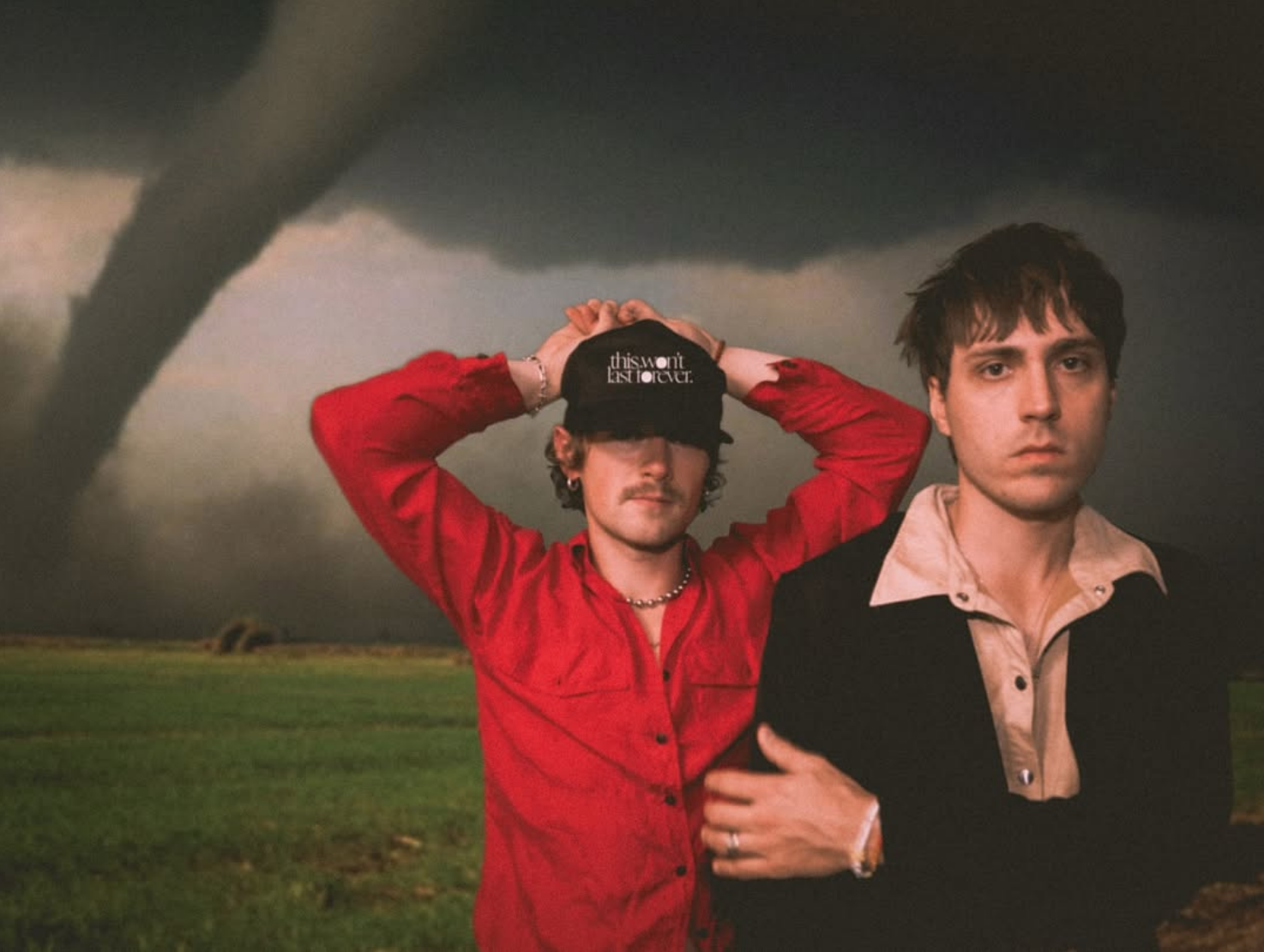
Photos courtesy of the artist
We sat down with indie-pop duo Joan to dive into their highly anticipated new album, This Won’t Last Forever. From experimenting with a release-as-you-go approach to navigating the fast-moving world of TikTok and AI in music, Joan share how they’ve evolved as artists in today’s industry. Along the way, they open up about balancing creativity with parenthood, why they’ve chosen to stay rooted in Little Rock, and what fans can expect next.

How are you feeling about your album coming out?
Steven: Really excited. It's crazy because with albums, you have to turn them in so far in advance. We have had the album for a long time. It feels like we have kind of had every emotion we could have with it. And now it's like waiting until everybody else can hear it for the first time, and have those emotions with it. So it's kind of a weird Limbo space right now.
Alan: Yeah, it's weird to be both mentally done with it and also still very excited about it. It's like a weird juxtaposition there, for sure.
You said you'd felt sort of all your emotions already. What were the emotions you felt while creating the album?
Steven: A lot. This one has been interesting because with Super Glue, we kind of wrote all of that album together, and did it sort of in a traditional album way–we built an album, we produced the album, we sent the album off. On this one, we started the album last August, and what we wanted to do was release songs that we knew were going to be on the album as we wrote them.
So last September, a year ago now, we released “Heartbodymindsoul”, which was the first single from the album, but we had no idea exactly what the album would look like. It was just like we had ideas, we had the concept of This Won't Last Forever, and we wrote with that in mind, but we didn't have any of the songs finished. It's just very different for us.
What made you want to release as you go?
Alan: We wanted to start getting it out, like we knew we were working on a second album, it just hadn't been fleshed out yet in its totality. It was like we had by last fall, we had probably three or four of the songs pretty much done. So we kind of, like, just pressed to go.
Steven: Yeah, it kind of feels weird to make people wait until you're done with a whole album. A big thing with releasing an album that we really don't like, for us at least, is sitting on the music for a long time and not being able to share that music.
You guys really like letting fans behind the curtain. I listened to some of your old podcasts, and you have stuff on Patreon, you’re breaking down songs. What makes you want to do that?
Alan: It's twofold; we listen to that kind of stuff for other artists, or other producers specifically. So it's fun to revisit the songs. It’s kind of fan service––to give them even more. I think it's like an interesting dichotomy between, you know, do you want to be like the mysterious band behind the curtain, or do you want to be in everyone's face all the time? And I think it's like there's a happy medium for us.
But I think we also get bogged down just based on how everything in life is now algorithmic and content-based. It can be exhausting, so we kind of have found our own little rhythm there that doesn't get exhausting.
How has the industry changed?
Steven: I think TikTok is the change. It's just flipped everything on its head. Maybe not good or bad, I don't really know, but it was interesting in our timeline, the label was one Kingpin, and touring was the other.
You see a lot more independent artists being given a platform that they wouldn't have if TikTok didn't exist. Sometimes I wish that we could start now and kind of see how it would be different, and most times, I'm very thankful that we didn't start now. It seems like you're throwing out everything into the ocean of the internet and just hoping that something catches.
Alan: I saw the perfect analogy. It was a meme thing I saw this morning. It was Kurt Cobain playing the intro to “Smells Like Teen Spirit” on some live thing. And the caption just said, ‘Can you imagine asking him about the algorithm?’
But I think my biggest brain split on it is artist versus content creator, and those are just two very different things that I think the music industry, and probably more so the tech industry, is trying to merge into one thing. But there's too much music now. I could sing on a voice memo right now and upload it in like 30 minutes. And it's like the fact that is getting the same curation rate as a polished label release is absolutely insane to me. Then you add AI into the mix, and it all gets even weirder.
What do you guys think of AI?
Alan: I'm personally pro it as a tool. Like, a tool, like some sort of assistant. I think it's awesome, and it's already what I was doing with Google. I think, like, the Suno thing is interesting, where it's like, I prompt an idea for a song, and then it spits out, like, a really, really, really amazing quality studio recording. It's like, very cool, I just don't know the implications of it, like, long term, like, kind of that, like, anyone can now make us, like, a very pro quality song with literally no skill level.
Steven: Well, even just like thinking about, you can put, you can put whatever on Spotify, or Apple Music, or whatever. You can make a really passable song and that is the competition.
Alan: Aside from crazy, it's kind of scary from a perspective of I don't think it's going to replace jobs on like a major scale, but a friend of mine is using it for demos, and it's spitting out really studio-quality demos. But I'm like, what then? Do you send that to the producer, and the producer takes his takes that, and like, just replicates the parts and like makes them feel real. Like, is that okay? Like, is it—eah— I just, I don't know. Like, I feel like we're like, such ground zero with all of it that we'll see.
I'd love to talk about your writing process. I know that you guys, at one point, would write every day. Is that still true?
Steven: Yeah, pretty. Yeah. I think it depends on where we're at, like, you know, in the album cycle, or working for other people or something, but pretty much we're in the studio, working every day, most likely writing something every day.
What does your creative partnership look like?
Alan: Just constant bickering. No, we've found our lanes in a lot of ways, and then those evolve over time. Like, you know, when we first started, it was like we were both pretty new to production. We always kind of had other people helping us with that. And then we were slowly learning ourselves.
I kind of imagine it like an old newsroom where you're like, talking about an article, and you're like, Hey, did you get that source? Send me that draft. And then you go, and then you send it to your editor, and it's just like, kind of all firing on all cylinders all at once.
You guys both grew up in Little Rock?
Alan: Or surrounding.
What informed the decision to stay in Little Rock, and do you have hopes for the Little Rock music scene?
Steven: I mean, what informed it was we just never, never had to move. When we started, we released our first thing on SoundCloud, just to see how it would go. I don't know we just, like, we kind of just found our footing here, and it felt good. Our family's here.
We definitely have a desire to see I would say more, just like arts culture in general, I would love to see Little Rock kind of flourish there, because there is one and there are, there are great artists here, but it's, it's really hard, it's hard to be a full time artist here, just because there's not a huge culture here. I think the only reason we're able to do it is because all of our kind of roots came from the internet, and just like people finding us through Spotify and through YouTube and through whatever, and so we're lucky because of that.
What do you like about Little Rock?
Alan: The Arkansas River runs right through downtown Little Rock. All my favorite cities in the world are river cities. I think it's just something unique about it.
For most people who aren't from here, it's like a flyover state,, but I like it personally, because most people are really kind here. Really neighborly.There’s that Southern hospitality.
While there's a disadvantage that we're not in an arts culture hub, it's also really nice, Earlier in the year, we flew to South Korea to work with this band, EPEX. They flew us out to do that, we did that in a three or four-day trip, and then we just flew back home. People were like Yeah, that's cool. You guys did that anyway, see, at church on Sunday.
You're both parents. How does that influence your creative process?
Steven: Just in every way possible. We both have two kids. We both have girls and boys, and they're both the same age. They're besties, and it's really, really sweet. We wrote Super Glue when we just had our girls–they're both almost four now. That was like us processing, like, what does it mean to be human and what does it mean to be a good person and a good dad? How do I navigate in the world, and how do I help someone else navigate the world? As far as influencing music in general, there's a bigger reason now to do everything. There is a way to get out of music now, just because you can go home, and you have to turn it off. Or, you know, your kids aren't going to get your attention.
Alan: It's a good thing, it increases pressure on time. I'm hyper aware of time now, and I never really was before. I am ADHD, for sure, and so time is a vortex anyway. But like, once we had kids, I was just like, now I'm hyper aware of, okay, if I get to the studio at nine and I leave by four every day, I've got seven hours with lunch to get everything done and I have five days a week, which seems like a lot of time, but as we all know, it goes by quick, and so, like, puts a really good and sometimes scary pressure on stuff, time wise. But it grounded me in a lot of ways that I didn't realize I needed grounding in.
Check out This Won’t Last Forever now here!