‘Sacrifice’ Review: Romain Gavras Puts The Fate Of The World In Chris Evans’ Hands
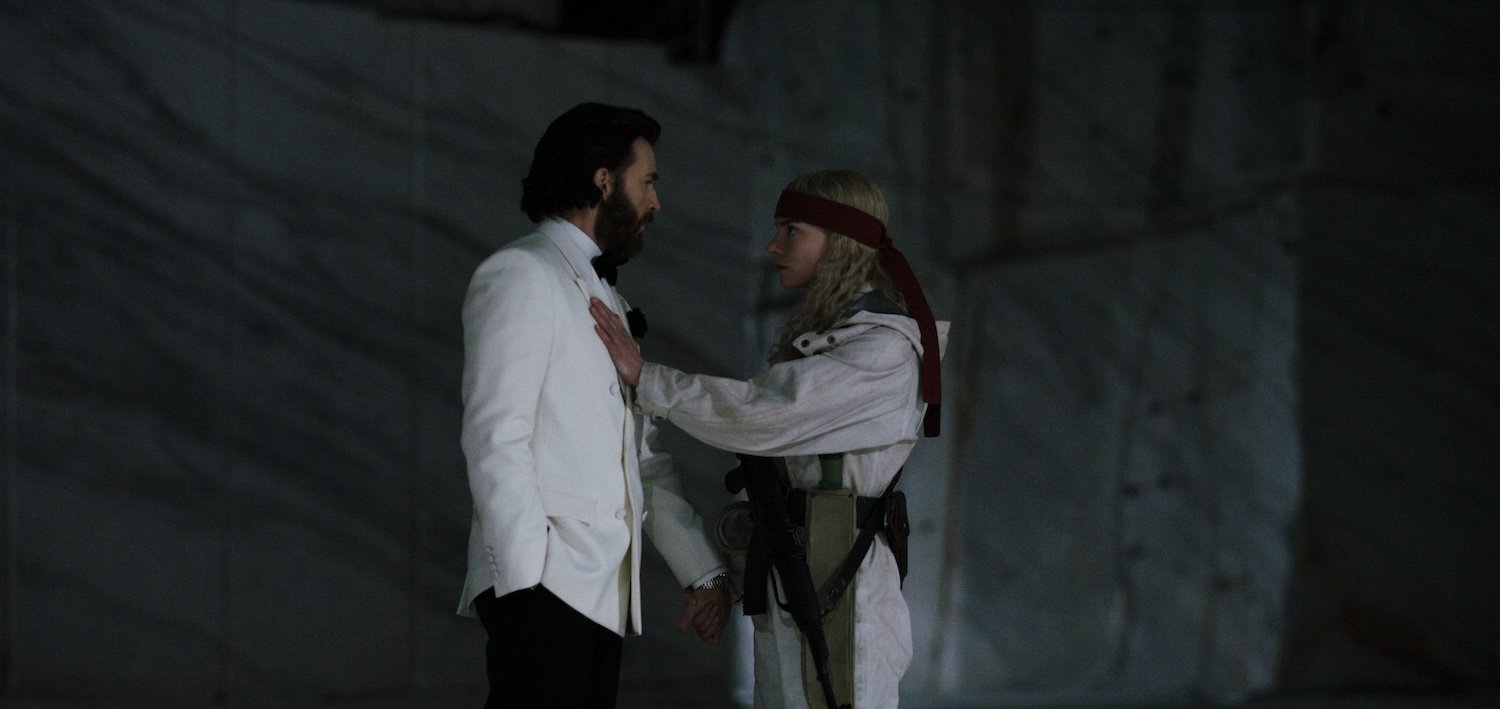
Chris Evans and Anya Taylor-Joy in 'Sacrifice.' | Courtesy of TIFF

Romain Gavras has never shied away from spectacle. From his early music videos to Athena (2022), he has a tendency to push images beyond their breaking point, and with Sacrifice (2025), he does just that: setting fire to both form and theme. The film, which premiered this year at TIFF, is a chaotic blend of satire, thriller, and modern myth, and while not every beat lands, the film earns its place as one of the festival’s more audacious crowd-pleasers.
The story follows Mike Tyler (Chris Evans), a fading Hollywood star with a bruised ego, who arrives in Greece to attend an eco-gala hosted by tech billionaire Ben Bracken (Vincent Cassel) and his wife Gloria (Salma Hayek). Mike hopes his appearance might spark a career revival and cleanse his image after a spectacular public breakdown. Instead, the event is hijacked by Joan (Anya Taylor-Joy), a fervent eco-terrorist who believes an impending volcanic eruption – that is set to end the world – can only be stopped through three human sacrifices: a King, a True Love, and a Hero. To her, Mike might be that Hero, though it’s less about saving the planet and more about testing how much of his own myth he’s willing to believe.
The opening act reigns triumphant. Gavras skewers the absurdity of virtue-signalling wealth with biting humour: neon banners blare slogans like “Make Earth Cool Again,” Charli XCX appears as a weary Mother Nature in a surreal concert, and the marble quarry location evokes a temple built for capitalism itself. When Joan’s militia storms the scene, the satire gives way to unnerving tension, blurring the line between theatrical protest and genuine menace.
What makes this setup sing is the interplay between Evans and Taylor-Joy. Evans is in self-parody mode, lampooning the hollow vanity of a star desperate to matter while weaving enough sincerity in his performance to make us root for him. He’s both ridiculous and strangely sympathetic, and that balancing act keeps the film on track when the narrative veers into wild territory. Taylor-Joy, meanwhile, is magnetic. Her Joan radiates conviction and dread in equal measure, her piercing stare daring the audience to believe in her prophecy even when the logic frays. She grounds the mystical with a raw humanity, and it’s impossible to look away when she’s on screen.
Visually, Sacrifice is staggering. Gavras shoots the Greek quarries, forests, and volcanic landscapes like they’re straight out of a fever dream. Flames lick at the edges of frames, shadows swallow characters whole, and the scale of the quarry dwarfs the humans within it, hammering home the insignificance of all their posturing. Even when the story falters, the imagery lingers, letting you feel the weight of every cavern, the heat of every ember.
Yet, falter it does. The middle act wobbles as the film shifts from satire to myth. The rules of Joan’s prophecy quickly become muddled, and by the time John Malkovich arrives with a dense exposition about blood chemistry and lava, the suspension of disbelief begins to stretch thin. The satire that started razor-sharp in the first act becomes scattered; Gavras wanted to say everything about celebrity, activism, billionaires, and myth all at once. Supporting characters — Cassel’s Bracken, Hayek’s Gloria, Ambika Mod’s Katie — feel more like chess pieces than full personalities, which dulls the emotional stakes of the sacrifice itself.
Still, even when the script loses focus, Gavras’ direction and the cast’s commitment carry the film. The sheer audacity of watching Chris Evans wrestle with whether to literally hurl himself into a volcano at the behest of a radical cult leader is exactly the sort of cinematic madness that makes festivals like TIFF worth attending.
It’s flawed, yes, but it’s never boring. My eyes didn’t look away from the screen even once, and I’d say that’s a feat in and of itself.
At its core, Sacrifice is about performance: the way celebrities perform activism, the way billionaires perform philanthropy, the way radicals perform righteousness. The problem is that Gavras sometimes pulls his punches. The film toys with biting commentary but often retreats into absurdist spectacle before it can truly sting. You can sense the hesitation on screen: to go for the jugular might risk alienating the very audience that funds and consumes films like this. Ironic, isn’t it?
Regardless, despite the unevenness, the film works. It dazzles with imagery, it provokes thoughtful discussions about late-stage capitalism, and it lingered in my mind long after the credits rolled. Evans’ willingness to lampoon his own heroic persona, Taylor-Joy’s conviction, and Gavras’ eye for visual chaos combine into something electric, even if imperfect.
In the end, Sacrifice is less a clean dissection of performative activism than it is a messy, volcanic eruption of satire, ego, and faith. It’s a film that dares to ask — with tongue only partly in cheek — what you would be willing to give up to save the world. Sure, not all of it works, but we get there in the end, and the ride is worth it.
Verdict: Four stars. Flawed, fiery, and unforgettable.
BTW, Charli gave it 5 stars