

“Black Trashbag Magic” at NYC Fringe: Alina Burke on Memory, Queer Adolescence, and Turning Trauma into Theatre
What happens when memory, trauma, and first love collide?
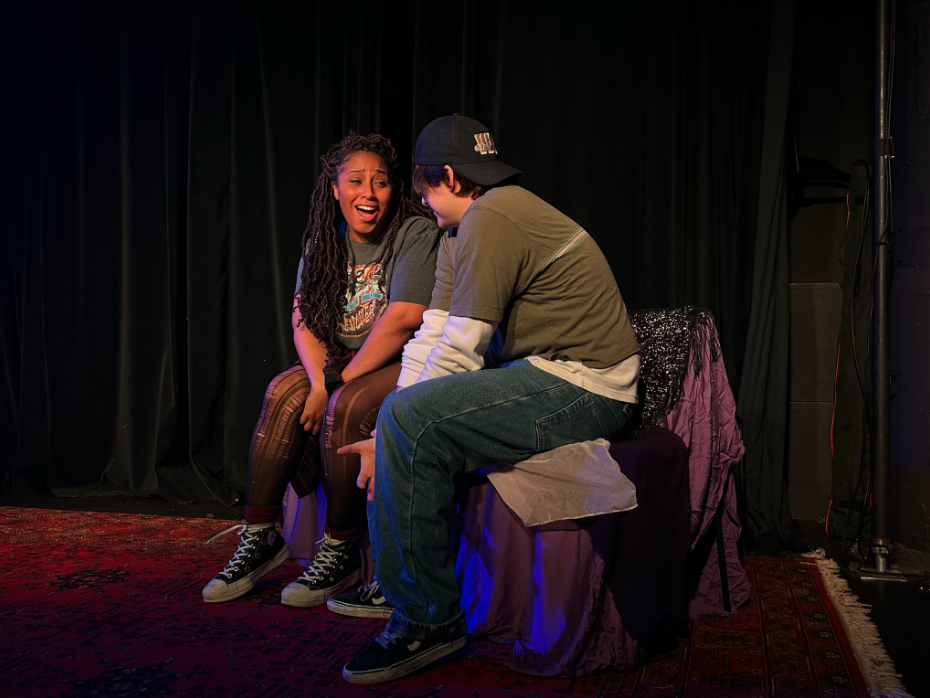
Photos courtesy of the author

Alina Burke is a New York City based playwright. Her show, Black Trashbag Magic, plays this month at The Rat in Brooklyn as part of the New York City Fringe Festival. I had the chance to chat with the writer about the process of creating the show and how it’s changed over the years.
EMI: Can you give me a synopsis of your play?
ALINA: So the show is based on my own adolescence. It's basically about your first feelings for another woman—those strong female friendships that are really impactful on your life. So it's about that, but also having these underlying, undiscovered feelings about your sexuality. It's also a memory play that explores how trauma affects our memories. So I am telling the story through a future lens, as if I've had everything all figured out.
EMI: When you say a memory play, can you elaborate?
ALINA: Basically, you have one person whose experience you're seeing everything through.
I have done a lot of thinking about how, when you experience something traumatic, your memories of that thing can either be repressed or it can change the way you remember things.
In the directing, there's a lot of eeriness, like these memories are maybe not what actually happened, because memories are never exactly what happened. Everyone remembers things differently.
So there are all these different layers between memory and reality.
EMI: Can you walk me through your writing process and how the show has evolved?
ALINA: I started writing it in undergrad when I had finally realized that I was a lesbian, and I was processing my high school relationships and the trauma that happened then.
I was thinking about it from the perspective of having this new identity and how it made me look at my relationships differently. The question became: was I actually feeling those things at the time, or am I imposing that meaning now that I know who I am?
So I started writing it in undergrad, then after graduating, I developed it further for the Tucson Fringe Festival. I directed a production there and experimented with devised transition scenes, playing with the sort of unusual performance space.
Then I didn’t look at it for a few years until grad school, where I re-edited it for a new play workshop class. We had actors, directors, and playwrights collaborating, and we did a reading at the end of the semester.
That process involved a lot of editing—especially making it less literal. Originally, it was very close to my actual memories, but I realized it worked better dramatically if I changed things.
There was also a lot of discussion with actors and the director about character motivations and dialogue.
EMI: How did it feel to have actors and directors commenting on your memories?
ALINA: Weird. I remember one point where someone was like, "Wow, that's like really crazy." And I was like, "Well, yeah, that actually happened." There's a line where the boyfriend in the play calls the main character a ticking time bomb, and that is something that an actual ex-boyfriend said to me. So that's a fun fact.
EMI: What's changed from your first rendition to now?
ALINA: The actual friendship was a little bit more distant, rather than there being like a huge fight. I guess realizing that the play kind of needed a fight between the two girls to feel more climactic and to feel their grief over the end of that relationship. I think that the fight moment between them is one of the strongest moments of this production.
In terms of the space, the original show was in this art gallery in my hometown. So there were constantly like trains going by. I was like, "Okay, we're gonna make the most of this.” I'm gonna make a rule for the actors, and if there's a train that goes by during the performance, they have to break what they're doing because you can't hear. So you're gonna not continue with the regularly scheduled text. You're gonna break what you're doing, and you're gonna do a ridiculous movement. I gave them some prompts of train-related poetry.
They would shout crazy, silly things. It ended up being kind of a good break in tension. But what was funny was that we had one performance where three trains go by. The first two, they were able to come up with stuff to do, and then the third one, they're like, "Oh my God, again? Really?" And so the one male actor in it just starts singing Drops of Jupiter by Train, and everybody sings along. They got the audience singing along.
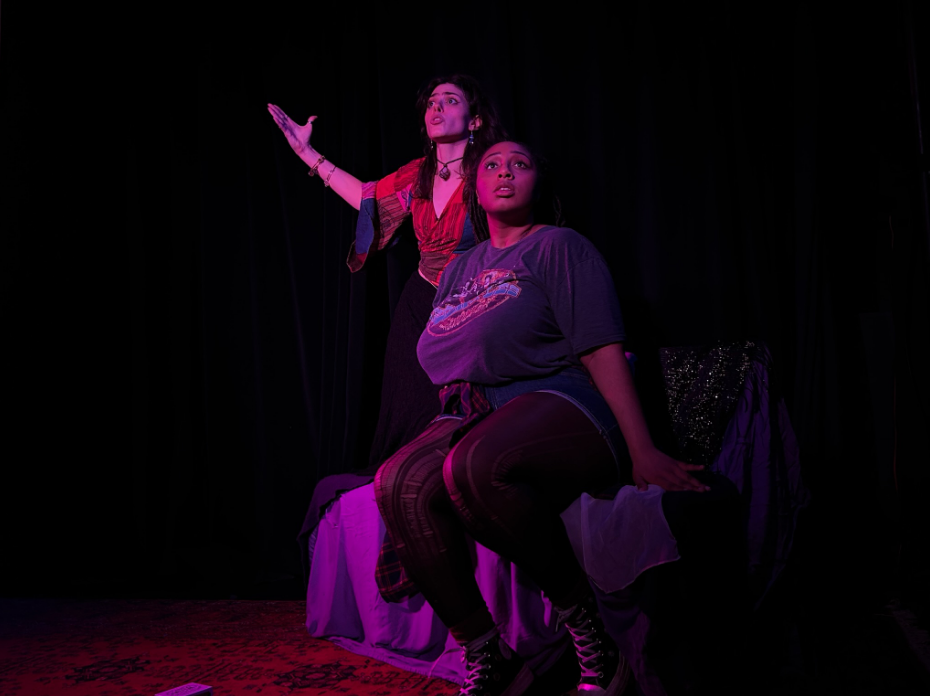
EMI: You've already had one set of your performances. How did you think it went? What did you learn from that first weekend?
ALINA: My director, Maggie Dunn, is doing a great job, especially with the sound. She's also a sound designer, and the sound really makes the piece super moody, which is really, really fun to see because I feel like it's different than the way it's been done the other times.
EMI: Can you talk to me a little bit about your collaboration with the director and the actors?
ALINA: Yeah, so I've worked with the two female actors in my class. They both came from the class where we did the reading. So they have worked extensively with these characters. Then we brought in a new director, Maggie Dunn, just for this performance. And she just totally gets it. She gets the vibe. She really understands the lesbian friendships and also just these like huge emotions that you're having when you're a teenager, particularly being a teenager during this online era. We talk about Tumblr in the show. It's like a very, I don't know, kinda grunge online aesthetic.
I think it's actually much better than it was when I directed it. I think it's hard to direct your own, your own memories because you're never really gonna be able to separate them from how you think it happened, and also separate the people from the people that you base these characters off of. I think it's important to have other people bring that perspective so that the characters grow beyond the people that they were originally based on.
EMI: How have the characters changed?
ALINA: Natalie, the main character, who's based on me, I can see that her emotions are generally the ones that I had at the time. But I think she's no longer just me. She's her own person with her own experiences. It's impossible for an actor to actually play me, and I wouldn't want them to be. I don't think that's the point.
EMI: What drew you to the genre of memory plays? Is that something you're usually drawn to, or is this just like specifically this experience?
ALINA: It's actually not something I've done a lot of work in. I honestly started writing this just to process my trauma. I use writing a lot to do that, and usually it's through journal entries. I think I started out just wanting to kind of hear what my ex-best friend would say if we were to talk again.
EMI: What does that feel like to sort of share that with an audience, and particularly strangers?
ALINA: It isn't always easy. I think it's like the peak of vulnerability to show other people your work. But you just have to do it, you're just writing poetry in your closet. I hope that some people in the audience might relate to it and find some comfort.
You can get tickets to Black Trashbag Magic through the weekend.